
Why Your Child Keeps Saying “I’m Bored” (And Why That’s Not a Problem)
School holidays used to feel simple.
I remember slow mornings that turned into full days outside. Sleep-ins without guilt. Time that stretched. I played with cousins and siblings for hours, the kind of play that didn’t have a clear beginning or end. We rode horses, built things, explored, got dirty, helped out on the family farm, and worked things out as we went. There wasn’t a constant stream of entertainment or a carefully planned schedule.
And yet, we were never lacking.
We were deeply engaged, challenged, connected, and learning in ways no one needed to direct.
Not much has changed about what children need.
But a lot has changed about what we expect from childhood.
Somewhere along the way, school holidays became something to manage. Something to fill. Something we feel responsible to “get right.” There is a quiet pressure to keep children busy, to make the most of the time, to ensure they are happy, stimulated, and not “wasting” their break.
So we plan. We organise. We offer options. We step in quickly when we hear “I’m bored.”
But what if that discomfort — that boredom — is not something to fix?
What if it is something to protect?
Research continues to show that self-directed, unstructured play is not just beneficial, but essential. Dr Peter Gray has long argued that play is the primary way children learn to navigate the world. Through play, they develop problem-solving skills, social understanding, emotional regulation, and a sense of autonomy. These are not outcomes that can be taught through instruction alone. They are lived and experienced.
Angela Hanscom also highlights the critical role of movement in a child’s development. She explains that children today are moving less than ever before, and it is impacting everything from their physical strength to their ability to regulate emotions and focus. When children don’t have enough opportunities for free movement outdoors, their bodies hold that unmet need — and it often shows up as restlessness, big behaviours, or an inability to settle.
Educators and play advocates like Teacher Tom and Marc Armitage continue to emphasise that play is not a luxury. It is not an “extra” once everything else is done. It is the work of childhood.
And yet, the type of play that children need most is often the first thing to disappear.
Unstructured play is slower. It is less predictable. It cannot be easily measured or controlled. It requires time, space, and a willingness from adults to step back.
It often begins with boredom.
That moment where a child says, “There’s nothing to do.”
It can feel uncomfortable for everyone. As adults, we are wired to respond, to offer solutions, to fix the feeling. But when we pause — when we allow that moment to exist without immediately filling it — something important begins to unfold.
Children start to look around.
They begin to notice.
They pick something up, try something out, follow an idea.
At first, it might seem small. But given time, that small idea grows.
This is where deep play begins.
Deep, meaningful play is very different from surface-level activity. It is immersive. Children lose track of time. They repeat actions, refine ideas, test limits, solve problems, and create their own challenges. Their bodies are involved. Their minds are engaged. They are fully present in what they are doing.
This kind of play supports regulation in a way that structured activities often cannot. The movement, the rhythm, the sensory input, the autonomy — all of it works together to calm the nervous system while also building strength, coordination, and confidence.
And right now, this matters more than ever.
Children are growing up in a world that is faster, louder, and more complex than it has ever been. There is more information, more stimulation, and more underlying uncertainty. Even when we try to shield them from it, they feel it. It shows up in their bodies, in their energy, in their behaviour.
When we respond by adding more — more activities, more structure, more input — we often miss what they are actually asking for.
They don’t need more to do.
They need more of what regulates them.
More movement.
More space.
More time to process through play.
School holidays offer a rare and valuable opportunity.
Not just a break from school, but a chance to reset.
A chance to slow the pace of life.
A chance to step away from constant structure and expectations.
A chance to reconnect children with the kind of experiences that support them best.
This does not mean doing nothing.
It means doing less of what doesn’t serve them, and more of what does.
It means allowing time for unstructured outdoor play. Time where children can climb, dig, build, explore, create, take risks, and follow their own ideas without interruption.
It means trusting that children are capable.
Trusting that boredom is not harmful, but necessary.
Trusting that when we step back, children step in.
When we allow this space, we begin to see a shift.
Children who seemed restless begin to settle into their play. Their ideas become more complex. Their confidence grows as they navigate challenges on their own. They become more connected — to themselves, to others, and to the world around them.
This is not about creating perfect childhood moments.
It is about protecting the conditions that allow childhood to unfold as it should.
Because childhood is not something to rush through or fill up.
It is something to experience.
In the dirt under their nails.
In the risks they take and overcome.
In the quiet moments of figuring things out.
In the freedom to move, create, and explore without constant direction.
This is where resilience is built.
This is where confidence grows.
This is where the magic lives.
And perhaps most importantly, this is where children get to simply be children.
Not managed. Not rushed. Not constantly entertained.
But deeply engaged in the kind of play that stays with them long after the holidays are over.
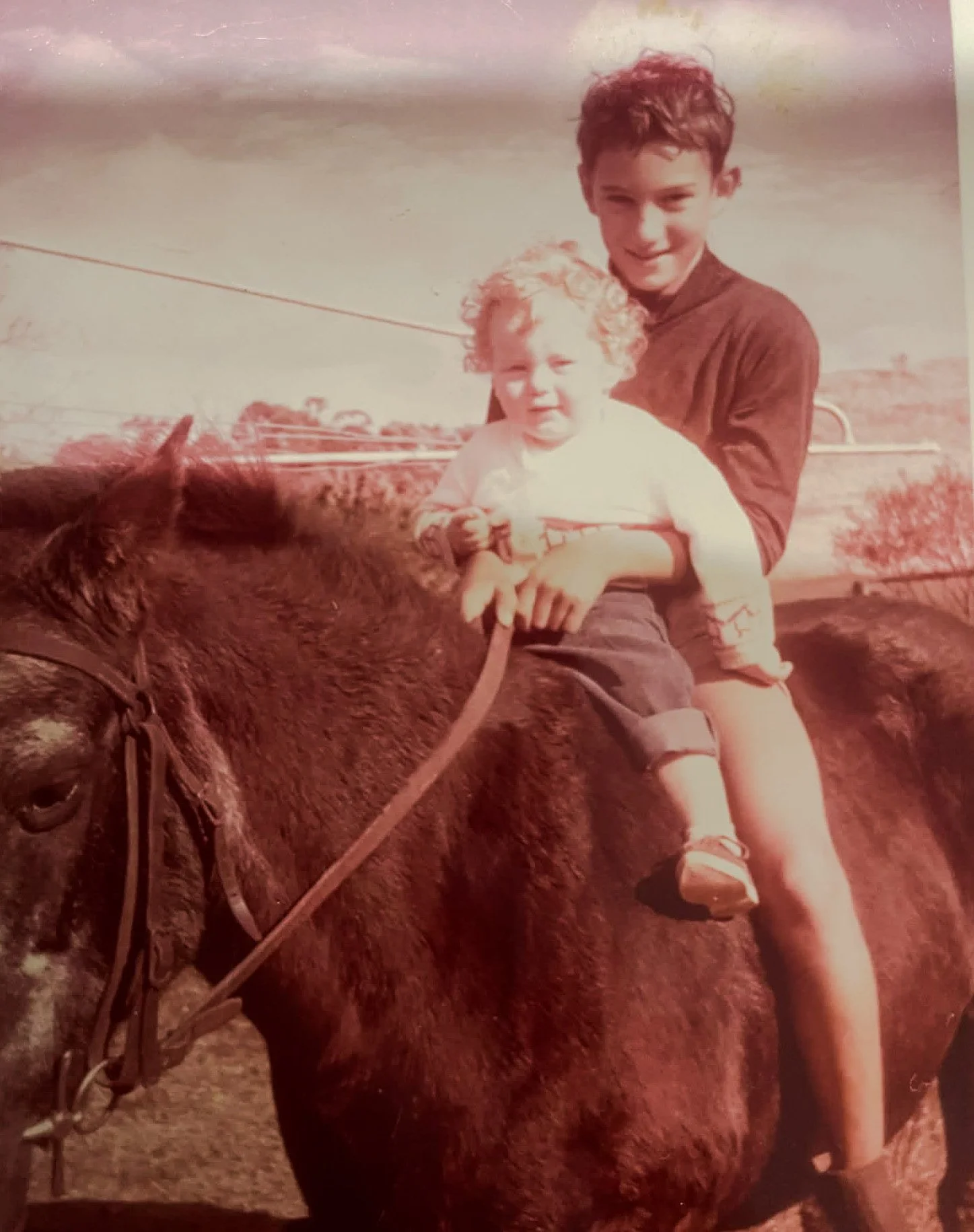
An image of me and my beloved Uncle (RIP).