
No, You Don’t Need to Fill Every Minute of Your Child’s Day
“Overcoming our fears and the tendency to keep children entertained are the first steps towards encouraging active, independent play outdoors.” — Angela Hanscom
It’s a confronting sentence when you sit with it for a moment. Not because it’s wrong, but because it gently points the finger back at us—the adults. Our fears. Our habits. Our need to step in, to fill the silence, to keep things moving.
Somewhere along the way, childhood became something we feel responsible to “run.”
You can see it everywhere. Carefully curated days. Back-to-back activities. Constant stimulation. And layered over the top of it all is the quiet pressure of social media—what everyone else’s children seem to be doing, achieving, experiencing. It creates this underlying belief that if we’re not actively engaging our children every moment, we’re somehow falling short.
I see it time and time again—families feeling the need to over-schedule, overbook, to find the next activity, the next outing, the next thing to fill the day. When in reality, staying home, visiting a local park, the beach, or a simple nature space is often far more developmentally appropriate for your child and probably calming for you too.
But children were never meant to be constantly entertained.
Peter Gray has written extensively about how play is not just something children do to pass time—it is how they learn to solve problems, regulate emotions, negotiate, create, and make sense of the world. When adults over-direct or over-schedule, we don’t enhance development—we interrupt it.
And yet, the discomfort of stepping back can feel enormous.
Because when we stop entertaining, something happens first.
Boredom.
It’s often loud. It can look like whining, restlessness, even frustration. And everything in us wants to fix it quickly. To offer an activity. To suggest something. To make it go away.
But that moment—that exact moment—is where something important begins.
Marc Armitage describes play as something that emerges when children are given time, space, and permission. It cannot be rushed. It cannot be forced. It unfolds. And that unfolding often begins in what adults misinterpret as “nothing happening.”
There is a growing body of research showing that unstructured time supports executive function, creativity, and resilience. Nathan Wallis speaks about the developing brain needing periods of low stimulation to integrate learning. When children are constantly entertained, their brains don’t get the opportunity to process, imagine, or initiate.
In other words, boredom is not a problem to solve. It is a doorway.
And just beyond that doorway is imagination.
If we can hold our nerve long enough, something shifts. The stick becomes a sword. The dirt becomes a world. The space that felt empty becomes full—rich with ideas that belong entirely to the child.
But this requires us to overcome something deeper than boredom.
It requires us to face our fears.
Fear that they might get hurt.
Fear that they might fall behind.
Fear that we might be judged.
Fear that we’re not doing enough.
Teacher Tom Hobson often writes about the importance of trusting children’s play, even when it looks messy, uncertain, or risky. Because within that uncertainty is where children test themselves. Where they build confidence not from being told they can—but from discovering that they can.
Outdoor play adds another layer to this.
Uneven ground. Loose parts. Weather. Risk.
All the things modern childhood has slowly stripped away.
And yet, these are exactly the conditions that grow capable children.
Angela Hanscom links outdoor play with improvements in sensory integration, posture, attention, and emotional regulation. When children climb, balance, dig, carry, build—they are not just “playing.” They are wiring their brains and bodies in ways no structured activity can replicate.
But none of this happens if we fill every gap.
None of this happens if we rush in too soon.
None of this happens if we don’t allow discomfort—both theirs and ours.
So what does this actually look like in real life?
It looks simpler than we think.
It looks like giving your child long, uninterrupted chunks of time—not minutes, but hours. Time where they are not being moved on, redirected, or entertained.
It looks like staying home without feeling guilty.
It looks like heading to a local park, the beach, or your backyard and letting that be enough.
It looks like not jumping in straight away when they say “I’m bored.”
It looks like saying less.
It looks like noticing when you’re about to interrupt—and choosing not to.
It looks like leaving space in the day instead of filling it.
It looks like trusting that play doesn’t need to be set up by you.
And it looks like holding your nerve through that uncomfortable beginning.
Because if we can sit in that space, what comes next is worth it.
You’ll start to see longer periods of engagement.
You’ll hear richer storytelling in their play.
You’ll notice problem-solving without adult input.
You’ll witness confidence that doesn’t rely on praise.
And perhaps most importantly, you’ll see a child who no longer needs to be constantly entertained—because they’ve learned how to engage with the world on their own terms.
This isn’t about doing less as parents.
It’s about doing less of what gets in the way.
Less directing.
Less filling.
Less interrupting.
And more trusting.
Because children don’t need their days filled.
They need space.
Space to wonder.
Space to struggle.
Space to create.
Space to become capable.
And that space—messy, uncomfortable, and often quiet—is exactly where play begins.
And if you’re ready to see what this actually looks like—not just read about it, but experience it—this is exactly what we do at Wild Gully.
Our sessions are built around time, space, and trust. No rushing. No back-to-back activities. Just real play, outdoors, where children are given the freedom to move through boredom and into deep, meaningful engagement.
For educators, I show you how to confidently step away from over-planning and step into long, uninterrupted play blocks that truly support development.
If you’re ready to stop filling every moment and start trusting play again, come and experience it with me.
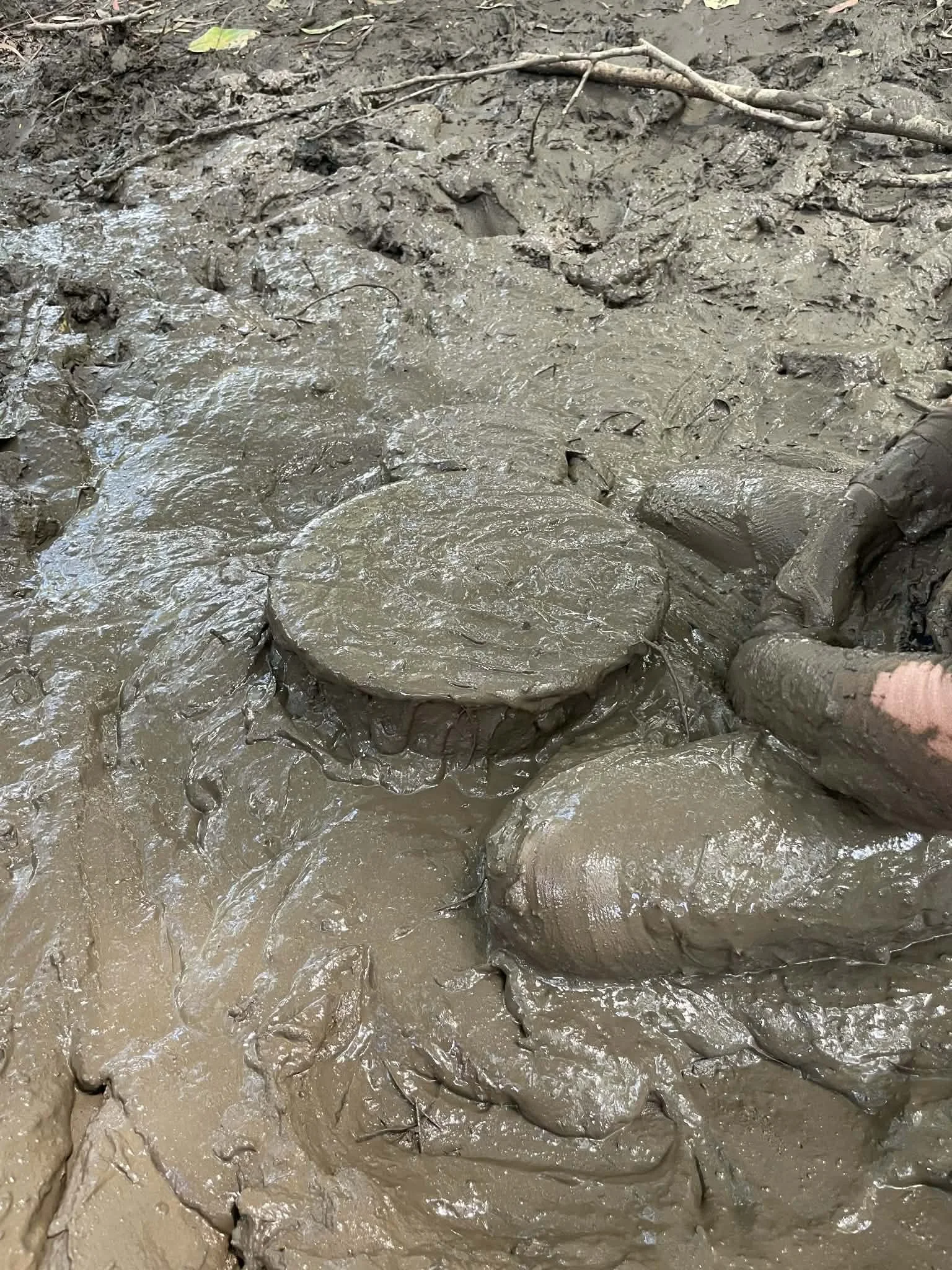
Less doing. More being. Time and space is where real play begins.