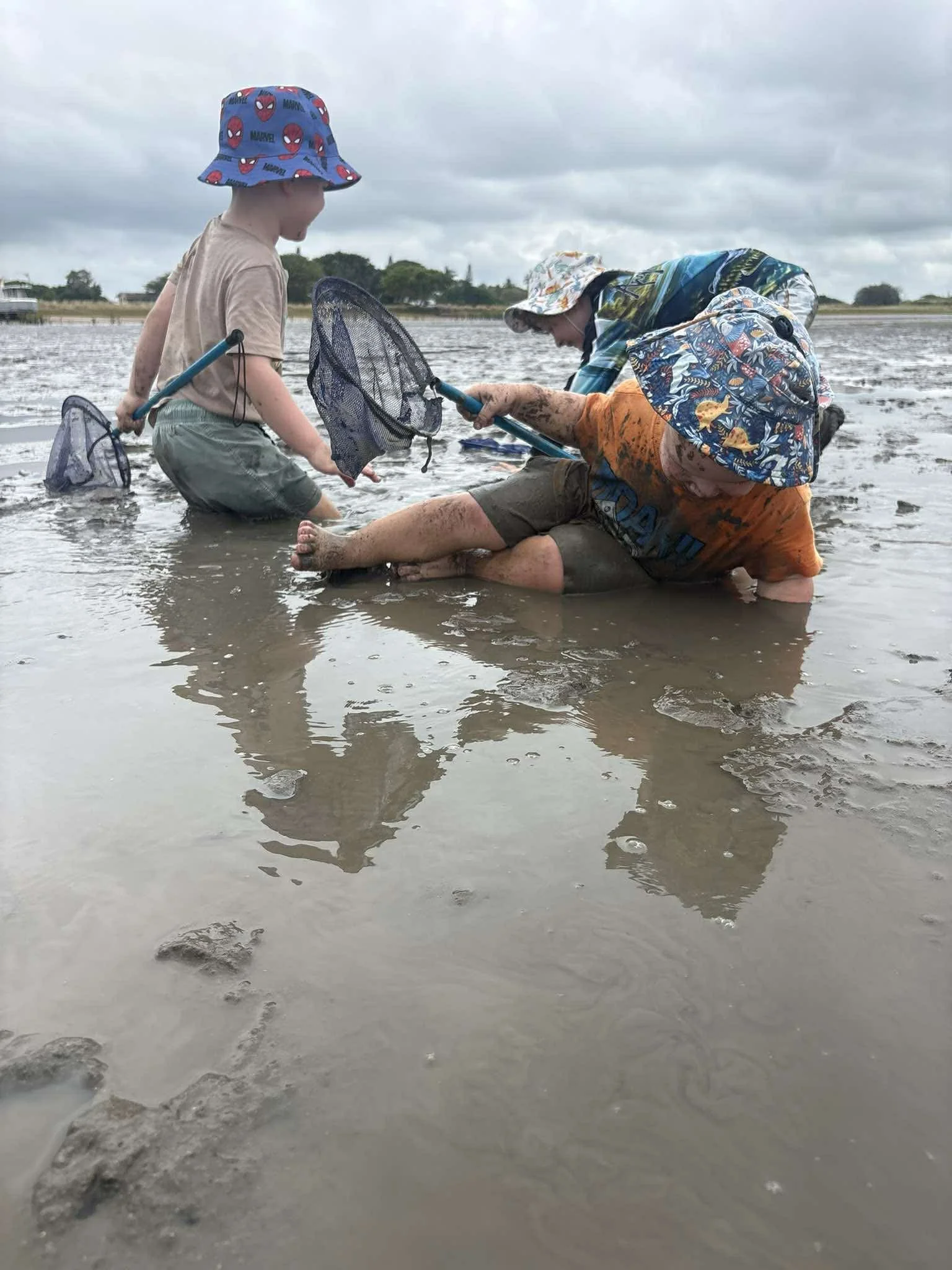
When the Environment Does the Teaching: Why Nature-Based Practice Is Not an Extra, but Essential
As educators across our region finalise their Kindy Uplift plans, many are carefully mapping goals around regulation, inclusion, executive functioning, oral language and wellbeing. These are worthy goals. They reflect deep care and professional responsibility. But beneath those carefully worded objectives often sits a quieter concern: Why does it feel like we are working harder than ever to manage behaviours that used to resolve more easily?
Over the past decade, early childhood environments have gradually become more controlled, more risk-averse and, unintentionally, more restrictive. In our efforts to keep children safe and meet increasing accountability demands, we have reduced heights, limited heavy materials, shortened opportunities for uninterrupted outdoor play and removed many of the experiences that once allowed children to test themselves physically and socially.
At the same time, we are writing plans to improve self-regulation.
This tension is worth examining.
From a neurodevelopmental perspective, regulation is not primarily a cognitive skill. It is a physiological one. A child’s ability to manage impulses, tolerate frustration and sustain attention is deeply connected to how well their sensory systems are integrated. Research in sensory processing and embodied cognition consistently shows that movement, heavy work, vestibular input and manageable risk experiences support the development of executive functioning. When children carry large objects, climb uneven surfaces, balance, dig, push, pull and construct with real materials, they are not “burning energy.” They are organising their nervous systems.
When we remove those opportunities, dysregulation does not disappear; it relocates.
The child who fidgets on the mat may be the child whose body has not had sufficient proprioceptive input. The child who seeks to knock over towers or crash into peers may be searching for impact and resistance. The child who appears oppositional may be protecting a fragile sense of competence in an environment that offers limited authentic challenge.
Nature-based practice addresses this at the root.
This does not require acreage, nor does it demand a radical overhaul of your service. What it requires is a shift in lens. When educators begin to view the outdoor environment as a co-regulator rather than a break space, everything changes. Logs are no longer clutter; they are tools for heavy work and collaboration. Uneven ground is not a liability; it is a vestibular gift. Loose parts are not mess; they are invitations to negotiate, design and problem-solve without adult choreography.
There is strong research supporting the connection between outdoor play and reduced stress markers in children. Time in natural environments has been associated with lower cortisol levels, improved attention and increased prosocial behaviour. Risky play, when developmentally appropriate and thoughtfully supervised, has been linked to improved risk assessment skills, resilience and emotional regulation. In other words, the very experiences we have been cautious about reintroducing may be the ones that most effectively support the goals outlined in our funding applications.
It is also important to consider the impact on educators. When teams feel anxious about risk, they become hyper-vigilant. Hyper-vigilance is exhausting. It narrows perception and reduces confidence in professional judgement. Conversely, when educators are equipped with a clear risk–benefit framework and understand the developmental rationale behind challenge, their posture shifts. They move from constant prevention to thoughtful scaffolding. They intervene less frequently but more intentionally. The culture begins to feel calmer, not because children are quieter, but because the adults are clearer.
One of the most powerful transformations I witness in services embedding nature-based pedagogy is the reduction in reactive teaching. When children have daily opportunities for sustained outdoor engagement that includes height, speed, resistance and open-ended materials, incidents of escalation often decrease. Collaboration increases because the materials themselves demand cooperation. Leadership emerges organically. Language becomes purposeful rather than prompted.
This is not romanticism. It is systems thinking.
If a Kindy Uplift plan identifies self-regulation as a priority, then the environment must be part of the strategy. If belonging and agency are central goals, children must have opportunities to influence and construct their world, not simply navigate one designed entirely by adults. If resilience is valued, children must encounter manageable struggle and experience the satisfaction of working through it.
Nature-based education is not an enrichment program layered on top of existing practice. It is a rebalancing of what children’s bodies.