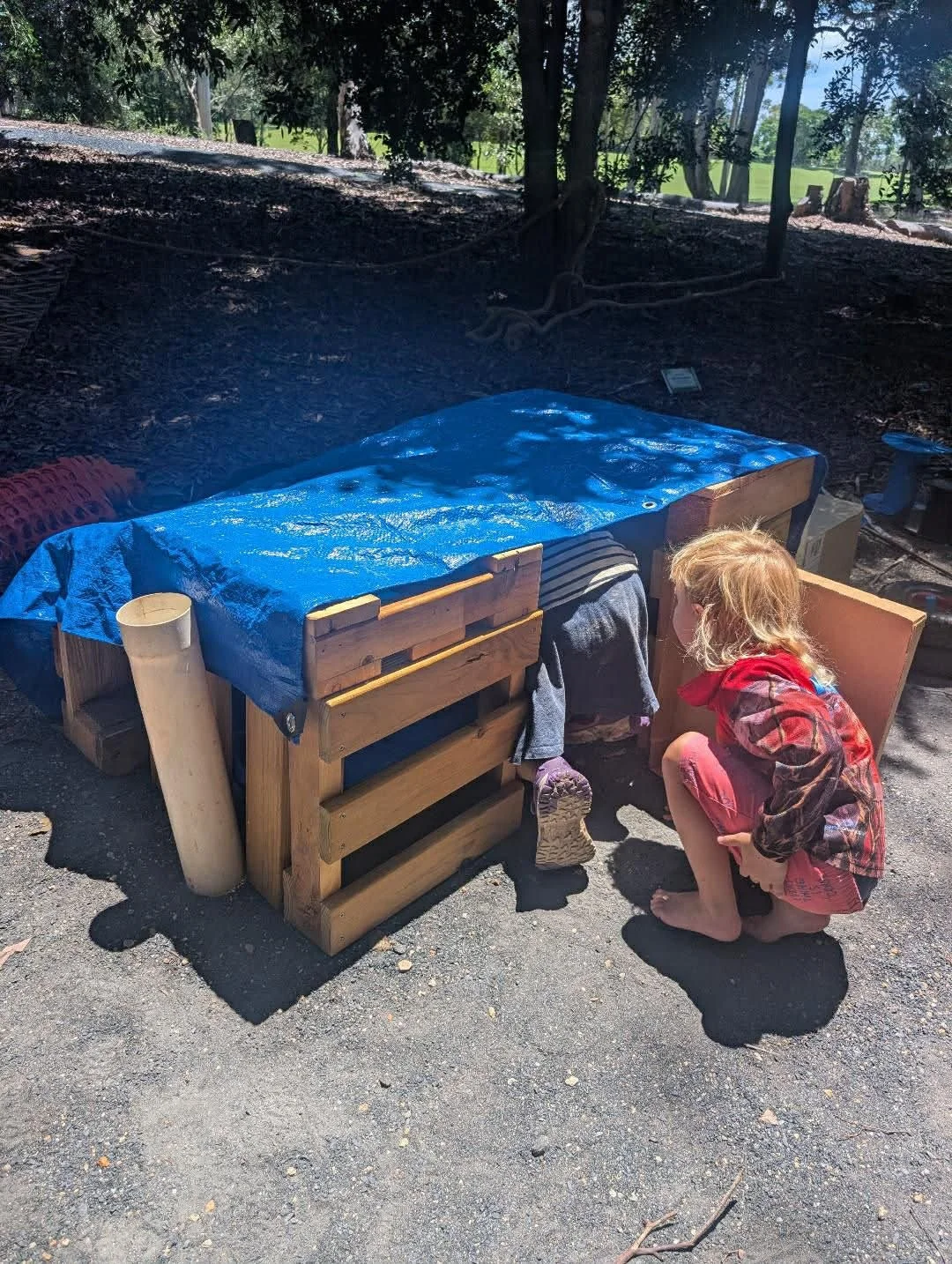
Are We Too Structured for You?
It’s a question we hear more often than you might think—especially from homeschool families who have consciously stepped away from rigid systems.
And it’s a fair question.
Because if you’ve chosen a different path for your child… the last thing you want is to walk back into something that feels like school.
So let’s talk about it honestly.
If it’s a fire session… yes, there is structure.
Safety comes first. Always.
When we’re working with fire, hand tools, or climbing, there is a clear process. Not to control children—but to set them up for success right from the very beginning.
That means:
Clear boundaries
Explicit modelling
Repeated routines
Simple, consistent expectations
Because when children understand how to engage safely… they can then step into it with confidence.
If that’s what we’re calling structure—then yes, absolutely.
But here’s where it matters…
We offer structure within an unstructured environment.
And that’s very different from what most people picture.
We are not directing every moment.
We are not moving children from task to task.
We are not deciding what they should create, build, or explore.
Instead, we:
Honour children
Protect their freedom
Value their choices
And prioritise play above all else
So what is structure?
Structure isn’t worksheets or timetables.
At its core, structure is:
A framework that provides safety, predictability, and support—so children can explore, take risks, and engage deeply in their environment.
In our space, structure looks like:
A known boundary (physical and emotional)
Clear expectations for safety
Consistent language and guidance
Multi-age modelling and learning
Adults who observe more than they interrupt
Within that framework, children are free to:
Follow their interests
Develop curiosity
Engage in real risk-taking
Build relationships across ages
Spend extended time in deep, meaningful play
And what is unstructured play?
Unstructured play is often misunderstood.
It doesn’t mean chaos.
It doesn’t mean “anything goes.”
And it doesn’t mean the absence of adults.
Unstructured play is:
Child-led, open-ended play where there is no predetermined outcome, and the child is in control of the direction, pace, and purpose.
In our sessions, that might look like:
A child spending an hour building with loose parts
Climbing, falling, retrying, and problem-solving
Creating imaginary worlds with others
Watching, observing, and choosing when to join
But even in this freedom, there are expectations that support success.
For example:
We stay within the agreed boundary
We wear closed shoes when using hand tools
We use a 3-point hold when climbing trees
We respect others, the space, and the materials
These aren’t restrictions—they are protective layers that allow freedom to exist safely.
We understand the concern.
Many homeschool families come to us because they are avoiding over-structured environments.
They’ve seen what happens when:
Children are rushed
Play is replaced with outcomes
Curiosity is boxed in
Movement is limited
Risk is removed
And they don’t want that.
Neither do we.
But here’s the reality…
Life is full of both structure and unstructured moments.
There are routines.
There are expectations.
There are systems we all move within.
The goal isn’t to remove structure entirely.
The goal is to ensure that structure:
Supports the child, rather than controls them
Enables freedom, rather than restricts it
Builds capability, not compliance
Why this balance matters (what the research tells us)
Research consistently shows that children thrive when they have:
Secure boundaries (which support emotional regulation)
Opportunities for risky play (which build resilience and problem-solving)
Autonomy in play (which supports motivation and independence)
Mixed-age interaction (which enhances social development)
Without any structure, children can feel uncertain or unsafe.
With too much structure, children lose agency.
The sweet spot sits right in the middle.
We are not school.
And this matters.
We are a nature play business operating within:
Permits
Risk-benefit assessments
Policies and procedures
These aren’t there to limit children.
They are there to ensure:
Everyone is safe
Risks are thoughtfully considered (not eliminated)
Children can engage in real, meaningful experiences
It’s what allows us to offer things like:
Fire sessions
Hand tool use
Tree climbing
Loose parts play at scale
What is really important?
Through play—real, uninterrupted, child-led play—children:
Learn how their bodies move and respond
Build resilience through challenge and failure
Develop problem-solving skills
Strengthen social connections
Regulate their nervous systems
Grow in confidence and independence
And they do this not through instruction…
…but through experience.
For the families wondering…
If you’re asking, “Is this too structured for us?”
What you’re really asking is:
Will my child still be free here?
And the answer is yes.
Free to move.
Free to explore.
Free to take risks.
Free to be a child.
Held within just enough structure to keep them safe—and set them up to thrive.
If anything, what we offer isn’t “too structured.”
It’s intentionally balanced.
And in today’s world, that balance is where the magic happens.